The great tap water conspiracy

Whenever I order a hot drink in a coffee shop, I usually ask for a tap water as well. It helps me stay hydrated, but also gives me a reason to spend longer catching up on newspapers or reading my book.

But it’s one thing asking for a tap water and another to actually get delivery of it. I’ve lost count of the number of times in recent weeks that I’ve ordered one and it has been completely forgotten about. And who wants to ask twice for a tap water?

So, is there is conspiracy going on here? Are businesses deliberately stopping you drinking tap water so they can instead sell you expensive bottled water or another drink?

2015-03-26 08.04.42

In a world where hospitality businesses are heavily driven by computers I guess that I can see how this sort of thing may happen. When you order paid for drinks like coffee, the assistant pushes a button for each of these on the till and more often than not a piece of paper comes out of a printer prompting a colleague to prepare your order.

The trouble is that items that are free, like tap water, often don’t go through the same computerised systems and inevitably get forgotten about. Tap water therefore requires humans to remember to pour them for you, which means that in busy establishments they can get missed – they are not brought to your table or not ready for you at the bar.

I admire the places that put jugs of water on the counter, so that everyone can enjoy as many glasses as they want during their visit without the hassle of needing to chase up forgotten orders. Independent coffee shops are good in this respect, but hats off as well to Caffe Nero for always putting jugs of water on the side.

For establishments that don’t do this, they should put more effort – through better systems and controls – into making sure tap water ordered is reliably delivered. Perhaps they should put buttons on their tills for it, so that it is included in a main drinks order.

And if places keep forgetting my tap water, I will boycott them. They have been warned. I won’t be part of their conspiracy any longer.
Bristol City Council’s expenses for everything but George’s red trousers

Many of us claim back expenses occurred during our working days. That tenner spent on a taxi to a meeting, the coffee with a potential new client or train travel to an industry conference. All very legitimate.

At the other end of the scale, figures released under Freedom of Information rules suggest that executives at cash-strapped local authority have been claiming back for more than just the odd cup of tea. Nearly £680,000 was spent on Bristol City Council payment cards last year.

The Deputy Mayor of Bristol’s assertion that “spending needs to be looked at in the context of the services the council provides whilst running a billion- pound business,” won’t have washed with many taxpayers, especially when they found out some money has been spent of designer clothes and expensive restaurants.

Local rag, the Bristol Post pointed out that transactions included £170 spent on designer UGG boots, £100 at a Ralph Lauren store and even £44 at a tattoo parlour. Someone also claimed for getting their hair done at Innovation Unisex Hair. And more than £4,200 went on eating out – ranging from top venues Bordeaux Quay and Goldbrick House to fast-food joins like McDonalds and KFC.

Before continuing, it is worth pointing out that there are perfectly legitimate reasons for using a card. The council said, for example, that the £32,400 spent on Asda groceries helped people in respite care.

But in the absence of precise details on the purchases, the more mischievous of us can only speculate what Bristol City Council executives picked up in their shopping baskets last year. The £37,800 spent on Amazon could, for example, have bought more than 2,220 copies of Local Council Finance by Chris Richards (priced £17). If executives read this (and other similar books) would it help them run a more efficient local authority?

And what did staff download as a result of spending £686 at iTunes? What did they see at the cinema?

Thankfully though, it doesn’t seem like taxpayers have been shelling out for any pairs of the distinctive red trousers that George Ferguson likes to buy. Just think how many of those you could buy for £680,000!

Capital Cairo risks abandoning working poor

The first time I flew into Cairo airport it was gone midnight when I landed, so thought I might have an easy journey into the city centre. How wrong I was. The roads were packed with cars and the trip took more than two hours.

My taxi driver told me that when it comes to driving Cairo is a city that never sleeps. Whenever you want to travel, there are always thousands of other motorists that are going to slow you down, he moaned.

Lanes – three, four or five deep – are marked out on the main highways, but in the rare sections where there was free-flowing traffic drivers didn’t seem to pay any attention to the painted lines. Motorists just invented an extra lane whenever they felt like it.

Travelling by car is essential if you want to move around Cairo. I would like to have been able to walk around more on my trips to Egypt’s capital, but in many parts of the city (away from the clogged up highways) just crossing the road is a considerable challenge. When your hotel is on what seems like a traffic Island you are pretty much marooned without a car.

Cairo has many treasures – not least the Cairo Museum, the Pyramids and important mosques – but overall I found it a polluted and generally unpleasant place to visit. As a tourist, you look at the main sites and then move onto somewhere more relaxing, like a resort by the Red Sea.

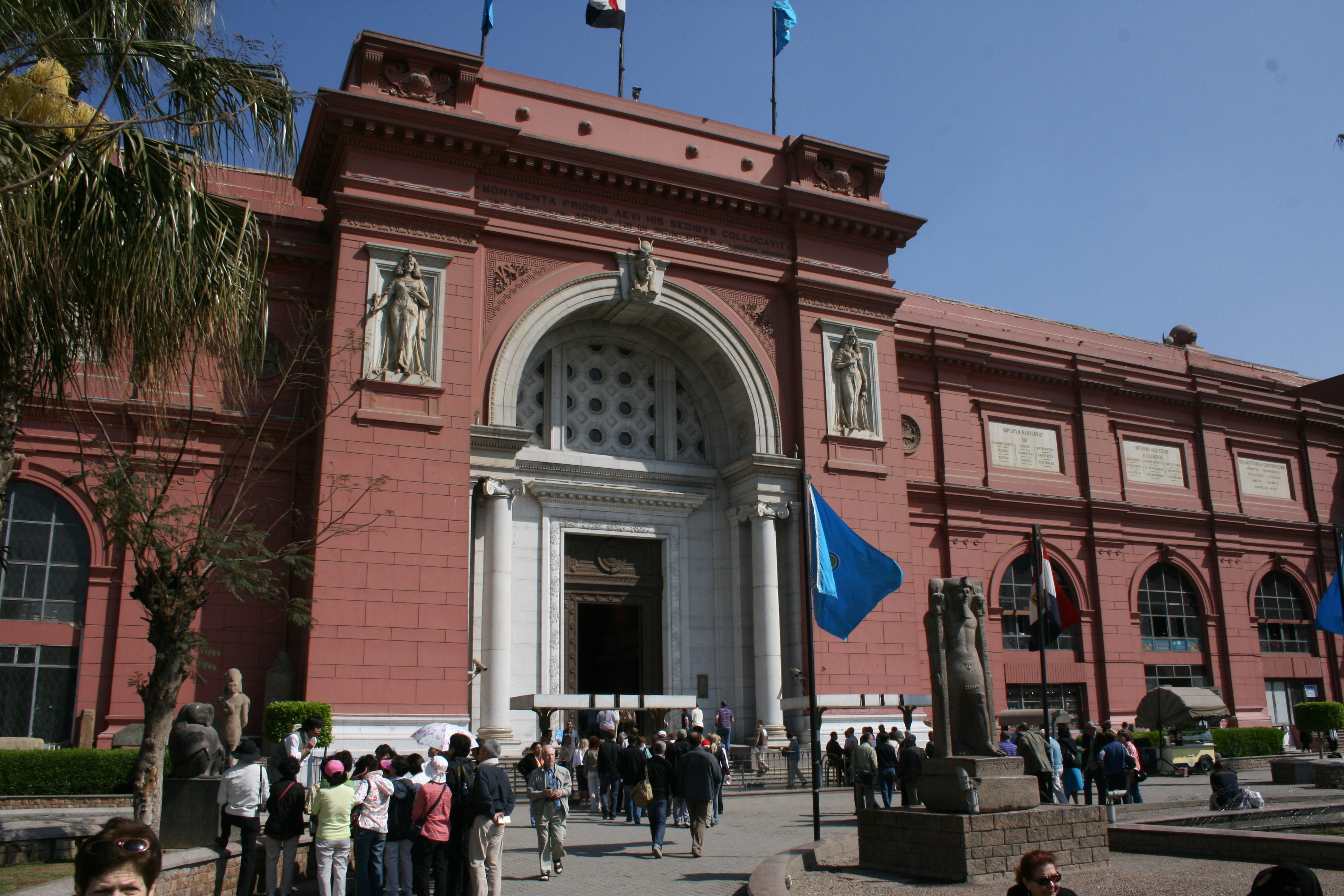
CairoMuseum5

The Cairo Museum – a calm scene in a busy city

And if Cairo is not that appealing for leisure travellers, it’s hardly going to win over business travellers either. In comparison to the modern infrastructure offered by Gulf states like of Dubai or Doha. The minute you step out of the luxury, air-conditioned hotels it is chaos.

The Egyptian government realises Cairo is not that an appealing place to visit, hence its decision to announce plans for a brand new $54 billion capital city in the desert. At 270 square miles it would be about the same size as Singapore. And its airport (which you would hope would have easy access from the city centre) would be even bigger than Heathrow.

Housing government buildings, diplomatic missions and global organisations, Capital Cairo (as the project is being referred to) is very much aimed at the elite. While it may succeed in the attracting international investment and the brightest business minds, it looks set to do nothing for a poor population struggling with sub-standard services.

Having two big cities is a real worry for Egypt’s development. Yes, Capital Cairo will provide jobs for the Egyptian people, but I think it is likely that many of the poor will be left to fend for themselves in the chronically underinvested city of Cairo. They need to see their futures mapped out on the capital’s master plan just as much as the elite.

Unexpected development in self-service checkouts

How many times have you thought you were being clever by skipping a long queue at your local supermarket by heading for the self-service checkouts? But then, after scanning just one item in your basket, the machine gives up all hope of being helpful.”Unexpected item in the bagging area,” says the robotic (yet soothing) voice.

The trouble is that there is nothing – bar hot air – in the bagging area, so you are stuck. The queue for being served by the human operators is shortening, yet you can’t do anything. You are stuck.

But Mrs Robot doesn’t give up. “Unexpected item in the bagging area,” she maintains.

After a few more seconds wait, she finally does accept there may be a problem. “An assistant is on its way,” she announces, but without any form of apology for the inconvenience you are currently facing.

The trouble is that Mrs Robot has promised you an assistant without checking who may be available. You soon realise that you are not the only person with error lights flashing at your terminal.

And you also then discover that the only person that is “trained” to help with the self-service checkout is at the far end of the store finding out whether the bacon Mrs Miggins wants to buy really is buy one, get one free.

Mrs Robot still promises that the “assistant is on its way” but you can’t see any progress. Meanwhile, the person who was at the back of the queue for the human operators when you started having problems is now happily walking out the store with their shopping.

It’s time for you too to join that queue and give up on your self-service adventure. What a waste of time.

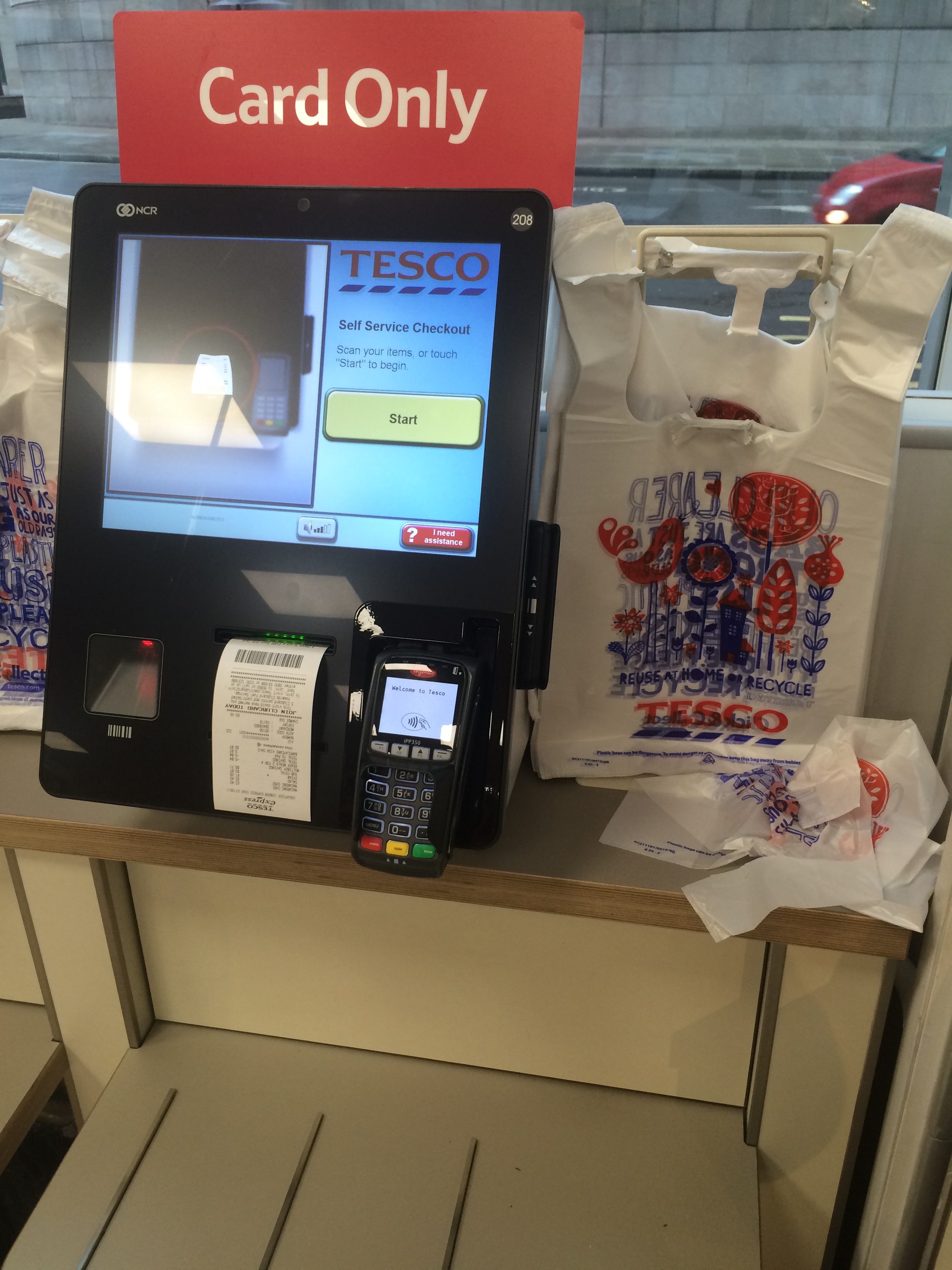
Having had a particularly bad week of “unexpected items in the bagging area” I was thrilled to see some innovation in this technology during a visit to the Tesco Express store near St Paul’s today.

The self-service machine I was presented with was slick, modern and didn’t seem to have any silly mechanism that attempts to work out what your shopping should weigh (thus causing all the calibration problems that brings so much irritation to the good people of Britain).

2015-03-15 15.51.36

The next generation of self-service checkouts

This is a welcome step-forward in the evolution of food shopping and I hope others follow suit and improve their self-service checkouts. My local Morrisons store needs to take particular note, as often only two out of their eight self-service machines are working. And even for the ones that are technically working, there is often that “unexpected” problem.

I once complained to Morrisons about the problem and was provided with the following nonsense response:

“Please be assured various provisions are made in our stores to make shopping easier and we cater for ‘express’ shopping by providing self serve machines. We believe that the system that we operate is as efficient as it can be without being over-strict in its regulation and we rely on our customers’ goodwill and co-operation in using this service.”

Tesco’s investment – by contrast – is very much an unexpected (but much welcomed) development in self-service checkouts.

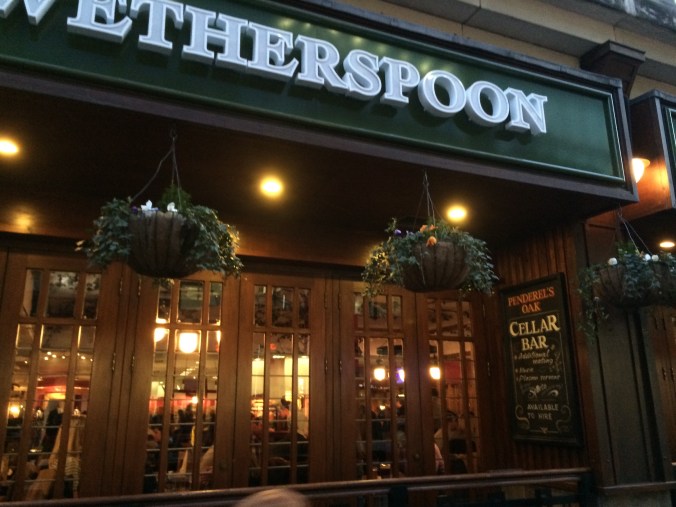
Why I won’t be visiting Wetherspoons for morning coffee 

While some turn their noses up at JD Wetherspoon, I am a big fan of the budget pub chain. The business has invested considerable sums of money in renovating old pubs over the years – and created many new ones out of interesting disused buildings (like the Prince of Wales in Cardiff that used to be a theatre where, if you get there early enough, you can drink with friends in your own private box).  


I also like the fact you can enjoy a changing range of beers from across the world – supporting independent breweries – at the chain’s outlets. At Wetherspoons there always seems to be an ale festival on and that’s something that should be celebrated. The hot food is getting better as well.


And having conquered the beer market, the pub chain now seems insistent on becoming the UK’s biggest coffee shop. The group already sells around 50 million coffees and 24 million breakfasts a year (the latter being more than that of Caffè Nero or Pret a Manger), but at its latest results Wetherspoons said it wants to triple its coffee and breakfast sales over the next 18 months. 


To entice customers through the door, from Monday it will offer filter coffee (with free re-fills) for 99p or less – as well as deals on breakfasts – to its morning customers in around 880 of its pubs. 


While some may indeed take up this offer, I won’t be one of them. In fact, I can’t think of anything worse than sitting in a dingy pub first thing in the morning, drinking a coffee on my way to work. Great as they are in the evening, I have never been to a Wetherspoons pubs for beers and thought this would be a good place to relax with the newspapers before a busy day.


And then there’s the coffee. Wetherspoons uses a Lavazza coffee but it comes straight from a machine. You don’t get the same experience that is created when a trained barista makes your coffee for you from freshly ground beans. It’s for this reason that I also choose to have a coffee at an independent store – especially those with plenty of natural light – or at a Costa Coffee where I am pretty partial to a flat white made from their special Paradise blend.    


Wetherspoons has my vote for a night out, but I will be drinking coffee elsewhere.   

We shouldn’t fear the machine 

Technology and the impact it can have on jobs is an emotional subject in many industries. New systems can bring cost efficiencies for businesses and noticeable service improvements for customers, but the end result may mean less staff are required to deliver a service (or at the very least they are deployed in different ways).

Unions have understandably been very vocal about this area in recent years. On the London Underground for example, the decision to close the majority of ticket offices in favour of requiring passenger to use self-service machines – or simply use contactless payments – has resulted in a succession of strikes. 

But this week’s Analysis programme on Radio 4 has highlighted that some experts believe technological advances are having a much wider impact than ever before. For a long time machines have put manual workers out of work, but now there is evidence this phenomenon is stretching much further to white collar jobs. 

Central to robots’ ability to muster into so-called ‘cognitive work’ is their ability to recognise ‘patterns’. If programmed correctly, machines now have the potential to perform tasks that were previously conducted by skilled professionals. 

Technological advances are of course nothing new. From the very beginning of the Industrial Revolution – perhaps even earlier – there has been an attempt to bring efficiencies to production processes. 

Rather than smashing up machines like Luddites, I think society should in many ways be optimistic about the impact technology can have on our working lives. As one contributor to this week’s Radio 4 programme pointed out, while robots just follow algorithms humans are very creative beings. So while machines do the drudge work, we can focus on innovating and enjoying much more meaningful things in life.     

For me, as technology advances, education and lifelong learning becomes much more important. While certain roles are being phased out, others – like computer programmers – are struggling to be filled. We need to make sure that our young people are getting the training they deserve to be equipped for the future. 

Desert rainforest shows Dubai has no limits to its imagination

Someone once described Dubai to me as “a Canary Wharf in the sun”; faceless modern tower blocks, surrounded by fake landscaped gardens and man-made beaches. Given the variety of natural beauty spots around the world, why on earth would anyone choose to holiday in this “desert outpost”?

Yet one of my university friends had moved out there and I had promised to visit.

As I set off on my first trip there in 2009, I didn’t have very high expectations. That year many in the media had written off the emirate as it faced up to a collapse of its property market and it was left with £65 billion of debt racked up by state owned companies. Neighbouring Abu Dhabi had to bail it out.

On the plane out to Dubai, I read articles in newspapers about British expats supposedly abandoning their cars at the airport and heading back home because they couldn’t afford the finance. Many had lost thousands from buying properties off-plan and their money vanishing into the sand.

But from the moment my plane landed I was captivated by Dubai. Far from being a place of doom and gloom, people I met there then seemed pretty upbeat. By night, the plush cocktail bars at the top of some of the tallest towers in the world were brimming with activity. By day, people traipsed around expansive shopping malls or enjoyed a quiet coffee down at the marina.

IMG_0206

Of course, Dubai then – as is the case now – was not just a place of leisure and pleasure. Out of sight from visitors, there was of course also some hard graft being committed in their air-conditioned offices. Many major international brands have their Middle Eastern headquarters there.

I have returned to Dubai many times since 2008, including visiting a fantastic music festival on the Palm, the man-made island connected to the main city by a causeway. Often my stay has been as a stop-over to somewhere else like India. And every time I have been there, I have had a good time.

The property market has recovered from those dark days and house prices are now rising to such an extent that some fear that it could crash again.

I am not so sure that the same mistakes will happen again. Dubai today seems much more mature than before. Given what happened in the past, people are more wary about handing over their money to property developers for schemes that may never be built.

But Dubai has however by no means lost its imaginative and creative side. Not satisfied with having indoor ski slopes in mega shopping centres and well-kempt green golf courses crafted out of the desert, plans are now in place to build the first rainforest in the Middle East. The development will be housed in a massive dome – complete with zip lines and walkways – with visitors taken on a journey through the rainforest’s flora and fauna.

And there’s much more planned for Dubai in the run up to the World Expo, which the emirate will host in 2020. Replicas of the Taj Mahal and the Eiffel Tower have been commissioned. The world’s biggest ferris wheel is also being constructed. There are more fun times ahead for Dubai.

If you know me well, you will know that I like – wherever possible – to veer off the tourist trail. But Dubai will always remain high up on my list of favourite destinations. I can’t wait to see what wild and wacky schemes have been built by the time I next visit.