At the Automobile Club of Egypt, Europeans and wealthy Egyptians were served fine restaurant meals, gambled in the casino and drank late into the night. They found attentive waiting staff who catered for their every need from the minute they arrived in their cars at the entrance to when they staggered home, often drunk.
Members were drawn from across the upper echelons of society, but perhaps the most important and frequent visitor was the Egyptian playboy king. He would often arrive in the early hours of the morning and wouldn’t leave until he was up on his gambling.
James Wright, the general manager, was an Englishman who presided over the smooth running of the club and ensured that high standards were maintained. He thought little of the Egyptians he employed, believing they were untrustworthy and couldn’t be left to their own devices.
But much as Wright – and Alku, a tyrant and senior aid to the king – tried to prevent it, some servants in the club formed close bonds with members. On the face of it, employees toed the party line, but beneath the surface they discretely challenged the management – and Britain’s continued occupation of Egypt which they felt starved them of opportunities.
It’s into this rich and fascinating world that best-selling author Alaa Al Aswany brings us with his latest novel. After a couple of slow starts, he has written a masterpiece – just ignore the complaints in newspaper reviews about it being a clunky translation. There is a good story to be told here.
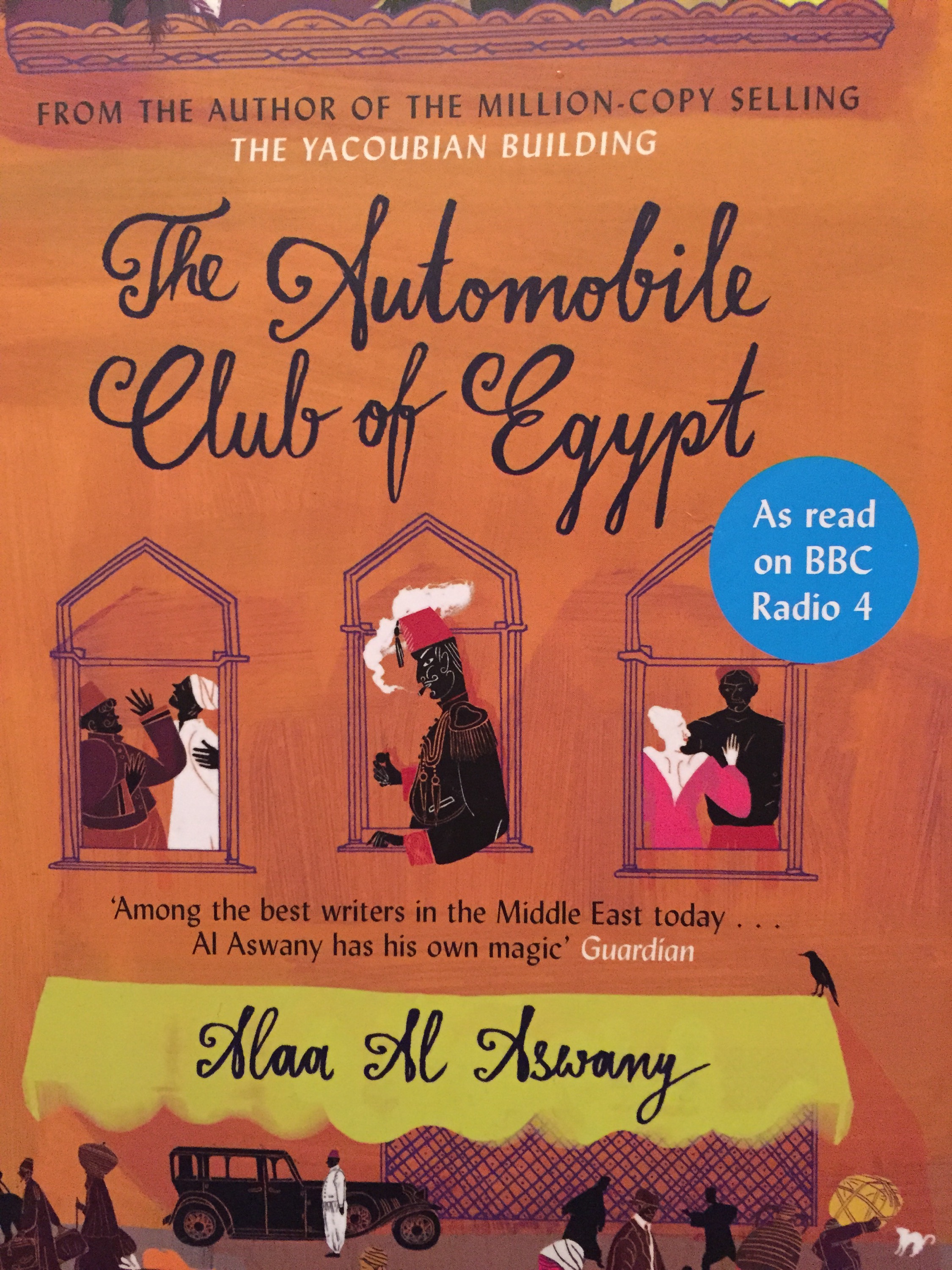
Had you merely visited as a guest you would have probably only experienced a slick operation, but swany has a gift in taking readers behind the scenes to introduce an array of interesting characters, many struggling to make ends meet and prepared to do whatever it takes to get their tips. His chapters flick between different groups like scenes in a play, always leaving the reader in suspense.
In the stock rooms, lobbies, bars and homes of the servants, we find how they survive on such meagre salaries, with little form of protection or pension. Yet in fact many do more than just exist; some work hard all hours of the day, so they can succeed at school or university. Yet even with qualifications, still for the most part they find their futures denied. Some, however, don’t take no for an answer.
If the beatings and other forms of oppression the staff received seem familiar in Egypt in the modern age, that’s because the parallels are there. Aswany is an outspoken critic of the current regime and has found his columns in Egyptian newspapers suspended.
The autocratic government in power today denies its citizens a democracy, while foreign powers – including former colonial ruler Britain – happily maintain cordial relations with Egypt. And conditions in prisons are just as terrible now as they were in the past. Perhaps they are actually worse.
Back in Aswany’s novel, the king was a big womaniser and his aides organised parties so that girls could be paraded in front of him. His Royal Highness would then select the one he wanted to accompany to his bed for the night.
With so much written about Britain’s former empire where colonial subjects were presented as powerless and forced to accept the fate awarded to them, it’s refreshing to read a beautiful piece of literature where individuals work together (often with the most unlikely of partners; people that would be expected to side with the occupiers) in an attempt to change the future of their country.
Although this is a piece of fiction, the club itself did exist in Cairo (some of the author’s relatives worked there and he focuses on the period between the Second World War and Nasser’s coup of 1952, the venue’s heyday). How it would have been fascinating, yet disturbing place to visit back then.
And while the British were thrown out by Egyptian nationalists more than 60 years, sadly the opportunities provided to ordinary people did not appear. The Arab Spring of five years achieved little bar lead to a change in president and so Aswany’s words tell us a much about Egypt today as they do about the past.
 Mark Gee