How can we encourage tourists to visit “hidden” London?

London has retained its position at the top of the tourist charts for another year, according to Mastercard’s Global Destinations Cities Index. On both visitor numbers (an estimated 18.82 million this year) and their spending (£13.15 billion) we have again seen off rivals like New York and Paris (plus also Middle Eastern contenders that are creeping up the rankings).

Inevitably, the announcement of London’s latest accolade has led some in recent days to stress that we should not take our leading status for granted if we want to keep up with the competition. “Invest to keep London the top tourist city,” said the London Evening Standard in a leader last week.

Investing in transport and other infrastructure in London is of course important if the capital is not to grind to a complete halt (Crossrail is coming, yet it will do nothing to ease congestion on north-south routes – we need Crossrail 2 to be approved).

But I also think that more can be done to encourage visitors to discover the unexplored pockets of this great city, because merely allowing so many to be concentrated in busy central areas is also problematic.

If you read my last post, you’ll know that I’m walking the 78 mile Capital Ring trail in sections, over a number of weeks. On my trip so far, I’ve encountered very few people for the most part and seen some wonderful places along the way.

Yes, I’ve stopped-by at popular attractions like Eltham Palace (with a café so busy that you would be lucky if you got served by the following weekend), but other places are far more peaceful. The Capital Ring has everything from remnants of 17th century spa resorts and charming follies to deserted woodland and wild grassland – all places that convince you that you’re a long way from the hustle and bustle of Leicester Square or Oxford Street.
2015-05-23 12.34.35

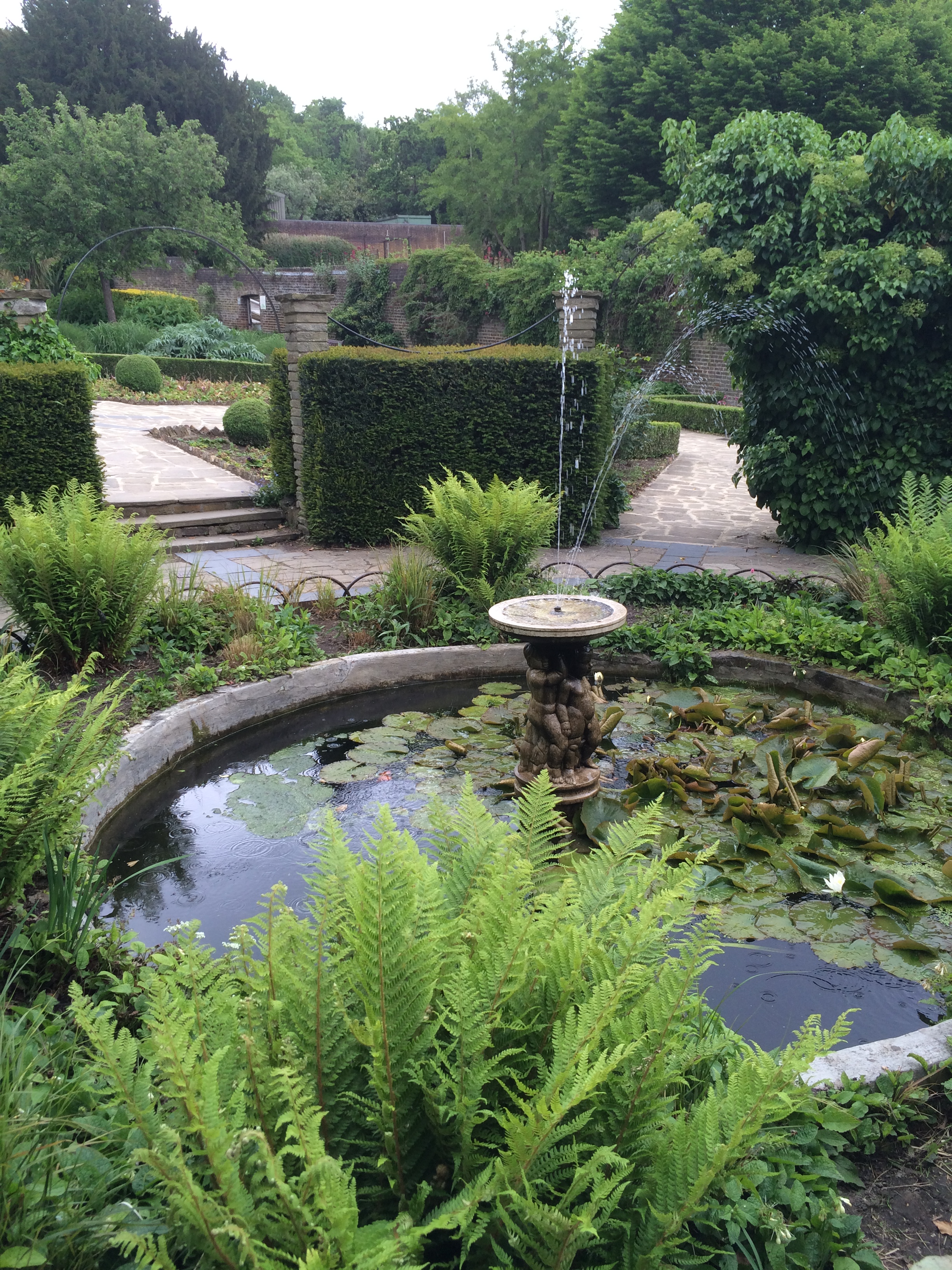
The Rookery – Streatham

These great places that I’ve found aren’t – on the whole – covered by the guidebooks or on tourist websites (although, to be fair to Transport for London, it does have some excellent downloadable Capital Ring PDFs, if you know where to find them).

So what can be done to encourage visitors to explore London’s hidden gems?

I think the big not-for-profit heritage and conservation organisations – like English Heritage and National Trust – should do more to encourage people to visit properties that they don’t own out right, yet deserve national recognition. The latter has so-called “National Trust Partner” listing in their members’ handbook, but they could go further.

Residents and tourists who have enjoyed visiting these “hidden” places also have a part to play by making recommendations on the likes of Tripadvisor (I am myself guilty of not reviewing enough places there). Guidebook writers can be so pressed for time these days that they can barely get to little more than the obvious spots.

There is also an interesting plan out at moment to designate the capital as Greater London National Park, the first urban area to achieve such status. Boasting 13,000 species of wildlife, 3,000 parks and 30,000 allotments and the world’s largest urban forest, you can see why the capital should be shouting about its greenery. Promoters believe that National Park status would encourage tourism and bring increased of outer boroughs, as well as bringing raising awareness of local conservation and environmental issues.
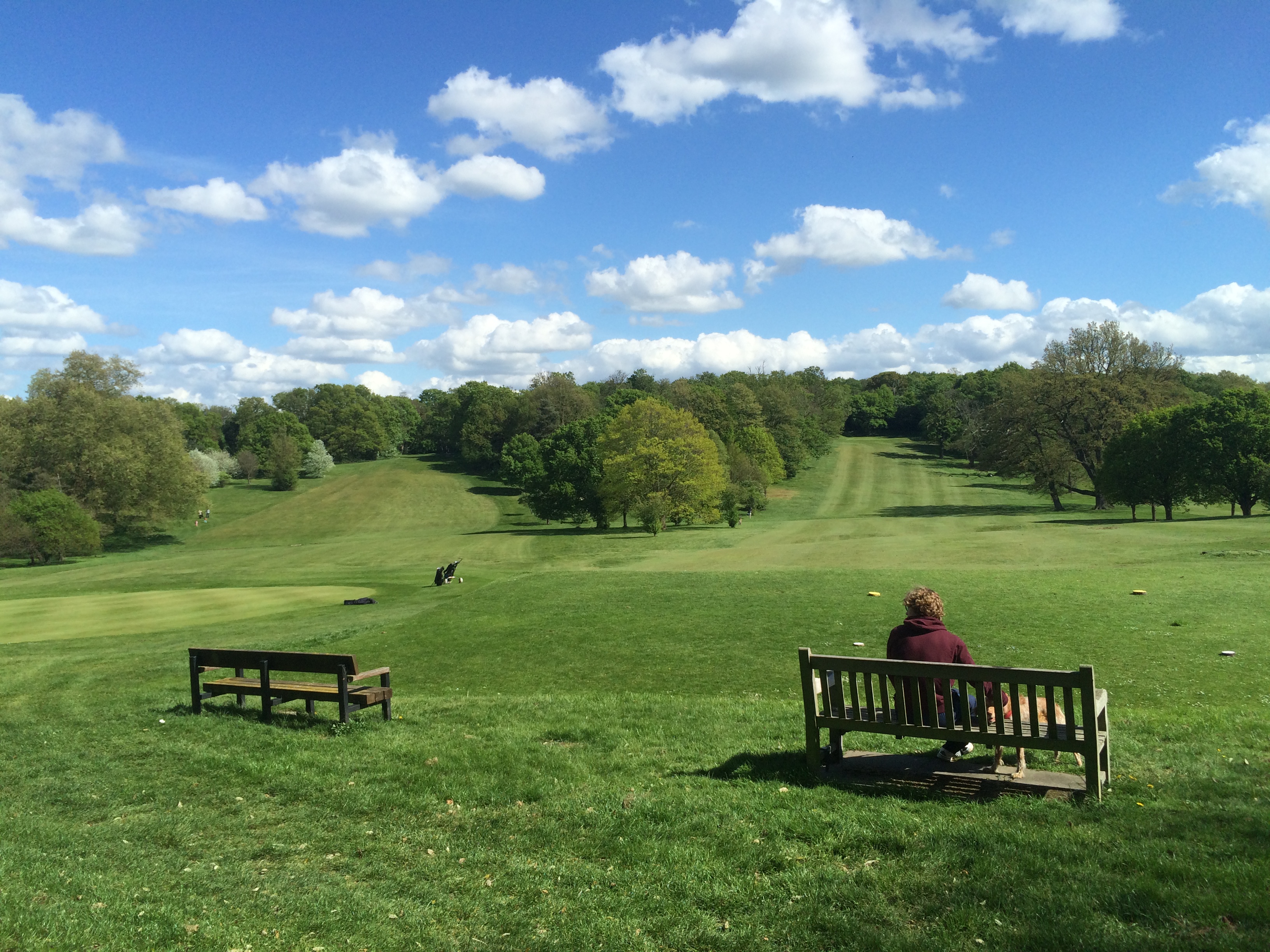
2015-05-09 15.34.54

I see this as little more than a publicity exercise, but isn’t that what we need for “hidden London”? Anything that encourages people away from the busy spots has got to be a good thing. Liverpool’s status as European Capital of Culture 2008 was fairly meaningless bar the very important fact it increased visitor numbers and therefore encouraged much-needed inward investment.

Today, I’m continuing my Capital Ring adventure and will be hoping for some peace and quiet after a busy week working in central London. But, for the good of the capital, I still wouldn’t mind seeing a few more people along the way.
 

On the trail of London’s hidden green spaces

I’m a big fan of hiking and have travelled all over the world, taking in some of the most beautiful walking trails imaginable.

But this summer, I wanted to set myself a challenge that would bring me much closer to home. I started walking, in May, along a route that would take me 78 miles around the edge of the London.

Officially, the well-signposted Capital Ring begins at Woolwich foot tunnel but in reality you can start anywhere and there are some excellent downloadable PDFs detailing each of the section available on the TFL website.

On average, I’ve think been walking about eight miles at a time, before finding a nearby train station to get back into central London. I then pick up the route at that point when I’m next ready to walk a section of the Capital Ring.

I published my first blog from the trail on my website Pastinthepresent.net yesterday, whereby I walked from Hackney Wick to Cyprus DLR. During that leg, I learned an awful lot about sewage.

I’ve still got some way to go on my Capital Ring trail, but already I’m appreciating London from a different perspective. Yes, it can be a busy place (I see the hustle and bustle every day given I work in Covent Garden), but there are some very quiet corners as well.

Over the next few weeks I’ll talk about the many wonderful parks that are linked up by the Capital Ring route. I’ve also passed by allotments, through woodland and nature reserves on my journey so far. Time after time, it really has felt like walking through rural Britain.

2015-05-09 15.34.54

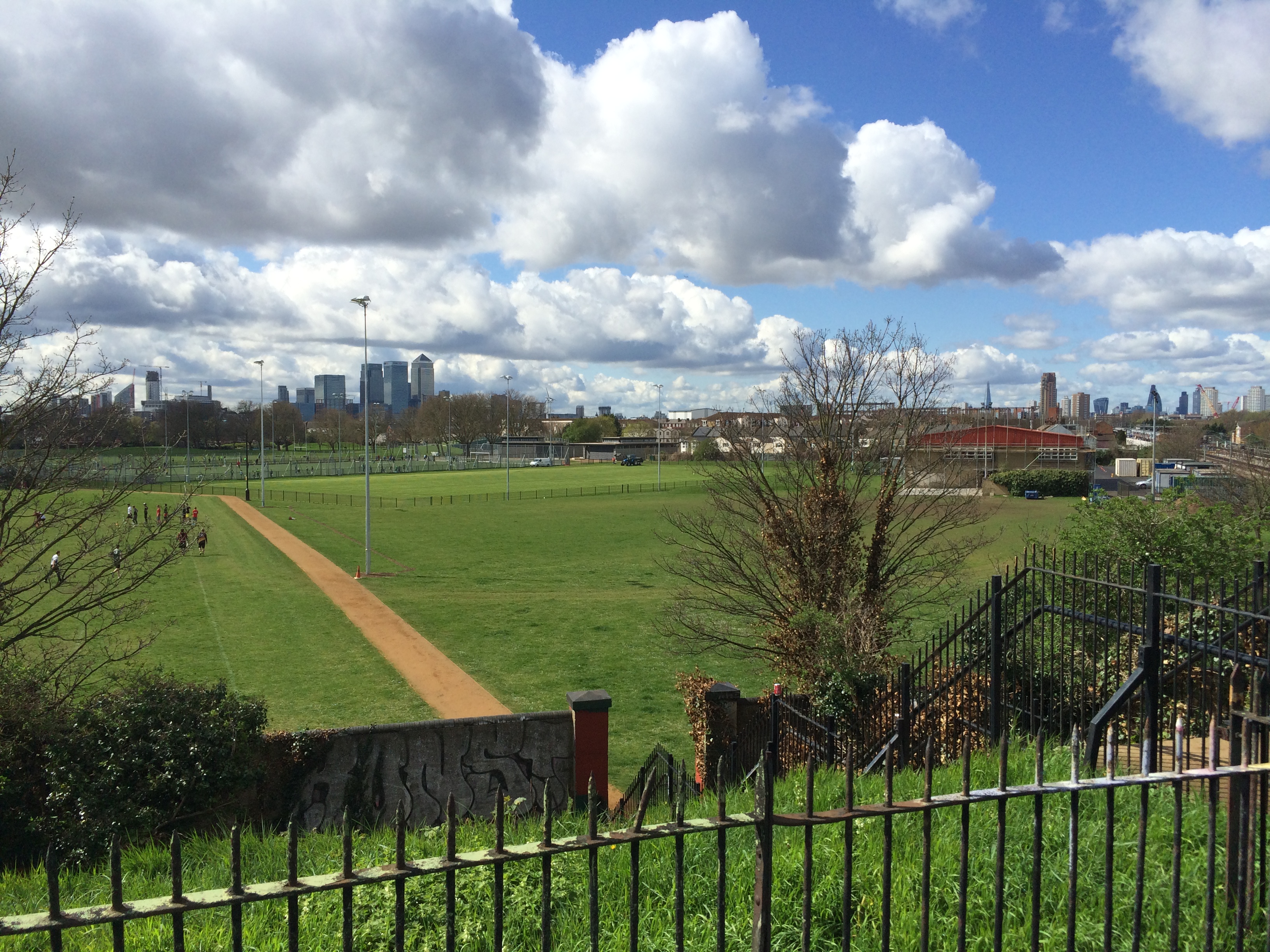
And as London is not a flat city you can take in some wonderful views if you grab a bench at one of the route’s high points. Often on the walk you can see the skyscrapers of Canary Wharf or the City, but they can appear so far into the distance that they could be on another planet.

2015-04-11 11.43.50

We are all guilty of ignoring the interesting places on our doorstep. This is my attempt to discover the hidden corners of my city. It’s turning out to be an enjoyable ride.

Orwell would be proud of youngsters’ efforts to keep the great British pub alive

George Orwell was right. Hidden away on quiet streets can be found some of the finest pubs around. It was true in Orwell’s day just as much as it is today.

“My favourite public-house, the Moon Under Water, is only two minutes from a bus stop, but it is on a side-street, and drunks and rowdies never seem to find their way there, even on a Saturday night,” he wrote in a piece for the Evening Standard in 1946.

“Its clientele, though fairly large, consists mostly of ‘regulars’ who occupy the same chair every evening and are there for conversation as much as for the beer”.

While the pub he described didn’t actually exist (he was making the point that traditional and much loved boozers were disappearing), the Standard article did set out many of the key elements of a good pub.

In the Moon Under Water it was “always quiet enough to talk”, while “the barmaids know most of their customers by name, and take a personal interest in everyone” and they served draught stout. But the “great surprise” was the large beer garden, with “plane trees, under which there are little green tables with iron chairs round them” and “swings and a chute for the children”.

Sound familiar?

Much of what Orwell wrote about pubs I consider important for drinking holes today.

For me, they need to offer great beers from the finest independent breweries around. If you feel like you’ve walked into a beer festival, then the pub has done its job properly.

And the staff should be friendly and will probably be on first name terms with the regulars perching on stools along the bar. Yes, pubs should offer food (Orwell though wanted little more than sandwiches), but not if that means that tables need to be booked in advance.

I like places that have an eclectic range of tables and chairs, where there’s a log fire burning to keep you warm on those cold winter nights and perhaps even a pub dog. It’s the simple things that make pubs special and places that people want to go, despite the distractions of modern life.

Sadly, many pubs have closed down in recent years and the statistics published by CAMRA have made for depressing reading. When it’s the last pub in a village that’s shutting or one of only a few remaining in a town then residents can really lose out.

But it seems there is a glimmer of hope for the pub from the next generation of publicans. New research published by Barclays reveals the number of pub landlords aged between 25 and 34 has risen by a quarter over the past three years (analysis of 8,000 of their business customers suggests that people from that age group own 15% of the country’s pubs).

CAMRA applauds the arrival of this “fresh blood,” with Neil Walker from the organisation commenting: “Increasingly, we’re seeing young people showing an interest in real ale and craft beer, which has already led to a boom in growth for microbreweries in the UK, and as such we should view this increase in the number of young licensees as a positive sign for the future of pubs”.

George Orwell would be proud of the fine efforts of these youngsters to keep the great British pub alive.

Thank goodness this election campaign is nearly over…..

After weeks of bickering, but little debate, we are now on the homeward stretch of an extremely tiring general election campaign.

The party manifestos have been out for weeks and voters have heard pretty much all they are going to hear from political leaders now the last TV “debate” is over. On Thursday we head to the polls no better informed that we were at the start of the campaign.

In reality, we could have had the vote weeks ago. The direction each of the parties would take in this election was set a long time ago. The Conservatives decided they would present themselves as strong on the economy; Labour opted to campaign on protecting welfare; the Lib Dems set out to highlight the difference they’ve made in government; UKIP unsurprisingly decided to take any opportunity they could to take a swipe at Europe.

Things have been so stage-managed in this election campaign that there has been little scrutiny on the big issues.

The first TV “debate” involving leaders from seven political parties was hardly a debate at all. It was little more than media savvy politicians delivering a series of set-piece and well-rehearsed statements. With so many people involved, there simply wasn’t time for any point to be properly debated. Instead of providing any clarification, I think the programme probably confused voters more than anything else.

Last week’s Question Time special brought more scrutiny and direct challenges from the audience, but it was pretty pathetic that David Cameron wouldn’t share the stage with Ed Miliband and Nick Clegg.

Political rallies up and down Britain have also been complete jokes. Rather than meeting “real people”, Cameron, Miliband and others have spent most of their time with flag-waving party members who don’t do or say anything that would upset the leaders. Robert Mugabe or Kim Jong-Un would be proud of the slick organisation we’ve seen so far in the hustings.

How different it was in previous campaigns. Last time round Gordon Brown called Mrs Duffy a bigot for challenging him. In other years John Prescott ended up punching someone and eggs were thrown at politicians.

But despite the dull campaign we have seen this year, TV stations and newspapers have largely been intent on leading with election stories (although there was a brief break to cover the Nepal earthquake and of course the Royal baby birth). The former has followed such a dry formula whereby they manufacture a “row” on a daily basis on a particular issue. One day it is NHS, the next it is over the economy.

And then of course everyone was up in arms with Miliband for going to film a YouTube video with Russell Brand. Was this sort of nonsense ever going to help voters decide what party would be best for Britain?

Thank goodness this election campaign is nearly over and life can now return to some sense of normality. Or will it?

Post election negotiations over forming a coalition could go on for some time – some commentators say weeks – but at least politicians won’t be appealing to the the public for their vote on a daily basis, and the talks will take place behind closed doors. Whether we like it or not, soon the future of the country will be out of our hands.

Let’s hope Tube phone users show common sense

Given the steady flurry of stories in the press in recent days about mobile phone provider EE allowing customers with selected handsets to make calls on Underground, I am worried.  When a Tube carriage is packed to the rafters – as is so often the case in the mornings – how will people be able to hear themselves think on their commutes into work if fellow passengers are belching into their phones. 

The new service for users with Lumia 640 and Samsung Galaxy Edge S6 / S6 Edge handsets makes use of wifi, so can technically only be used within reach of stations where this is installed. Expect passengers shouting, “I can’t hear you, I’m going into a tunnel….. I’m on a Tube…. I’m underground….WHAT WHAT…..”. 

We are now a week on from the “launch” and I’ve not seen a single person making a call, but in the weeks, months and years to come I can only see more people using their phones on the Underground – particularly as the service is added to more handsets and offered by more providers. Technology will also inevitably be improved in the coming years meaning that one day people may be able to make calls between stations.

This is just what I fear.

Since wi-fi has been rolled out in Underground stations, I have found the service useful, for example if my train has got stuck in a tunnel and I have needed to let someone know by email I am running late. I’ve also been used wi-fi to be able to plan my route after leaving the station.

But being able to make calls is a step too far, especially when passengers have – at times – so little personal space in carriages.

We can’t stop the technology developing, so the only thing we can hope for is that people only use their phones if making a call is absolutely urgent. Passengers could get aggressive if loud mouths are having a general chit chat right in their faces. With the prospect of fights developing over the issue, I hope people will be sensible as to when they use their phones. 

Why Obama and Castro’s handshake matters 

In the business of international diplomacy, handshakes are par for the course for senior politicians and diplomats. Barely a week goes by it seems without our TV news bulletins reporting on a summit of sorts, only for it to end with leaders lined up outside together posing for the cameras. 

The participants laugh, they smile and – of course – they shake each other’s hands. From meetings of the G8 to that of finance ministers gathering in Brussels, it’s a run of the mill formula which  I think most viewers at home (including me!) find boring. By all means shake hands behind closed doors, but please don’t make a big thing of it in front of the TV cameras.  

But in amongst the sea of annoying handshakes, there is one that has caught my attention this weekend – that between US president Barack Obama and his Cuban counterpart, Raul Castro – at the Summit of the Americas in Panama City. It’s significant of course because the leaders of these two countries haven’t met in more than 50 years and therefore (as an exception to my rule) it is a handshake worth celebrating.  

Whatever your views on the political systems in place in the two countries (both have their faults in my opinion),  I am a firm believer in dialogue. How can you possibly hope to settle your differences if you don’t talk?  

I admire Obama for picking up the phone to Castro back in December and declaring Washington’s stance on Havana as “outdated”. Things had been at loggerheads since the US broke off diplomatic relations with Cuba in 1959 when Raul, led by his brother Fidel, toppled US-backed President Fulgencio Batista and a revolutionary socialist state was established.  

Since then US citizens have faced travel restrictions making it hard for them to visit the Caribbean island just 90 miles from Florida and Cuba has also been slapped with a trade embargo. While Obama’s December intervention eased things (flight links from the US to Havana are already being improved and certain products can be imported), the stark fact is that the summit opened with Cuba still being classed as a state sponsor of terrorism. 

While it’s possible to get caught up on the detail,  I think it’s laughable that an island with no real powerful international allies (Venezuela, it’s closest friend is facing the worst economic crisis for decades and its old ally Russia doesn’t seem that interested in what it is up to these days) could be seen as any significant threat to the world. Cuba should be removed from the terror list and sanctions dropped. 

I was very enthused from my visit to Cuba earlier this year. As you will see from the blogs I wrote for Pastinthepresent.net I was positive about how individuals are making the most of the changing political environment. Those that are entrepreneurial are building better lives for themselves through opening restaurants and guesthouses. They won’t become millionaires overnight, but if they can make their enterprises succeed they will achieve a greater standard of living than if they rely on a state salary of $20 a month.  

Of course,  I am not saying things are perfect in Havana – and the US certainly has its problems as well – given that an unknown number of dissidents are in prison and a family dynasty has absolute control of the country. But the fact that the two leaders have met is a positive step forwards. Let’s hope this weekend’s handshake is the start of much better relations between the two countries.

The great tap water conspiracy

Whenever I order a hot drink in a coffee shop, I usually ask for a tap water as well. It helps me stay hydrated, but also gives me a reason to spend longer catching up on newspapers or reading my book.

But it’s one thing asking for a tap water and another to actually get delivery of it. I’ve lost count of the number of times in recent weeks that I’ve ordered one and it has been completely forgotten about. And who wants to ask twice for a tap water?

So, is there is conspiracy going on here? Are businesses deliberately stopping you drinking tap water so they can instead sell you expensive bottled water or another drink?

2015-03-26 08.04.42

In a world where hospitality businesses are heavily driven by computers I guess that I can see how this sort of thing may happen. When you order paid for drinks like coffee, the assistant pushes a button for each of these on the till and more often than not a piece of paper comes out of a printer prompting a colleague to prepare your order.

The trouble is that items that are free, like tap water, often don’t go through the same computerised systems and inevitably get forgotten about. Tap water therefore requires humans to remember to pour them for you, which means that in busy establishments they can get missed – they are not brought to your table or not ready for you at the bar.

I admire the places that put jugs of water on the counter, so that everyone can enjoy as many glasses as they want during their visit without the hassle of needing to chase up forgotten orders. Independent coffee shops are good in this respect, but hats off as well to Caffe Nero for always putting jugs of water on the side.

For establishments that don’t do this, they should put more effort – through better systems and controls – into making sure tap water ordered is reliably delivered. Perhaps they should put buttons on their tills for it, so that it is included in a main drinks order.

And if places keep forgetting my tap water, I will boycott them. They have been warned. I won’t be part of their conspiracy any longer.

Bristol City Council’s expenses for everything but George’s red trousers

Many of us claim back expenses occurred during our working days. That tenner spent on a taxi to a meeting, the coffee with a potential new client or train travel to an industry conference. All very legitimate.

At the other end of the scale, figures released under Freedom of Information rules suggest that executives at cash-strapped local authority have been claiming back for more than just the odd cup of tea. Nearly £680,000 was spent on Bristol City Council payment cards last year.

The Deputy Mayor of Bristol’s assertion that “spending needs to be looked at in the context of the services the council provides whilst running a billion- pound business,” won’t have washed with many taxpayers, especially when they found out some money has been spent of designer clothes and expensive restaurants.

Local rag, the Bristol Post pointed out that transactions included £170 spent on designer UGG boots, £100 at a Ralph Lauren store and even £44 at a tattoo parlour. Someone also claimed for getting their hair done at Innovation Unisex Hair. And more than £4,200 went on eating out – ranging from top venues Bordeaux Quay and Goldbrick House to fast-food joins like McDonalds and KFC.

Before continuing, it is worth pointing out that there are perfectly legitimate reasons for using a card. The council said, for example, that the £32,400 spent on Asda groceries helped people in respite care.

But in the absence of precise details on the purchases, the more mischievous of us can only speculate what Bristol City Council executives picked up in their shopping baskets last year. The £37,800 spent on Amazon could, for example, have bought more than 2,220 copies of Local Council Finance by Chris Richards (priced £17). If executives read this (and other similar books) would it help them run a more efficient local authority?

And what did staff download as a result of spending £686 at iTunes? What did they see at the cinema?

Thankfully though, it doesn’t seem like taxpayers have been shelling out for any pairs of the distinctive red trousers that George Ferguson likes to buy. Just think how many of those you could buy for £680,000!

Capital Cairo risks abandoning working poor

The first time I flew into Cairo airport it was gone midnight when I landed, so thought I might have an easy journey into the city centre. How wrong I was. The roads were packed with cars and the trip took more than two hours.

My taxi driver told me that when it comes to driving Cairo is a city that never sleeps. Whenever you want to travel, there are always thousands of other motorists that are going to slow you down, he moaned.

Lanes – three, four or five deep – are marked out on the main highways, but in the rare sections where there was free-flowing traffic drivers didn’t seem to pay any attention to the painted lines. Motorists just invented an extra lane whenever they felt like it.

Travelling by car is essential if you want to move around Cairo. I would like to have been able to walk around more on my trips to Egypt’s capital, but in many parts of the city (away from the clogged up highways) just crossing the road is a considerable challenge. When your hotel is on what seems like a traffic Island you are pretty much marooned without a car.

Cairo has many treasures – not least the Cairo Museum, the Pyramids and important mosques – but overall I found it a polluted and generally unpleasant place to visit. As a tourist, you look at the main sites and then move onto somewhere more relaxing, like a resort by the Red Sea.

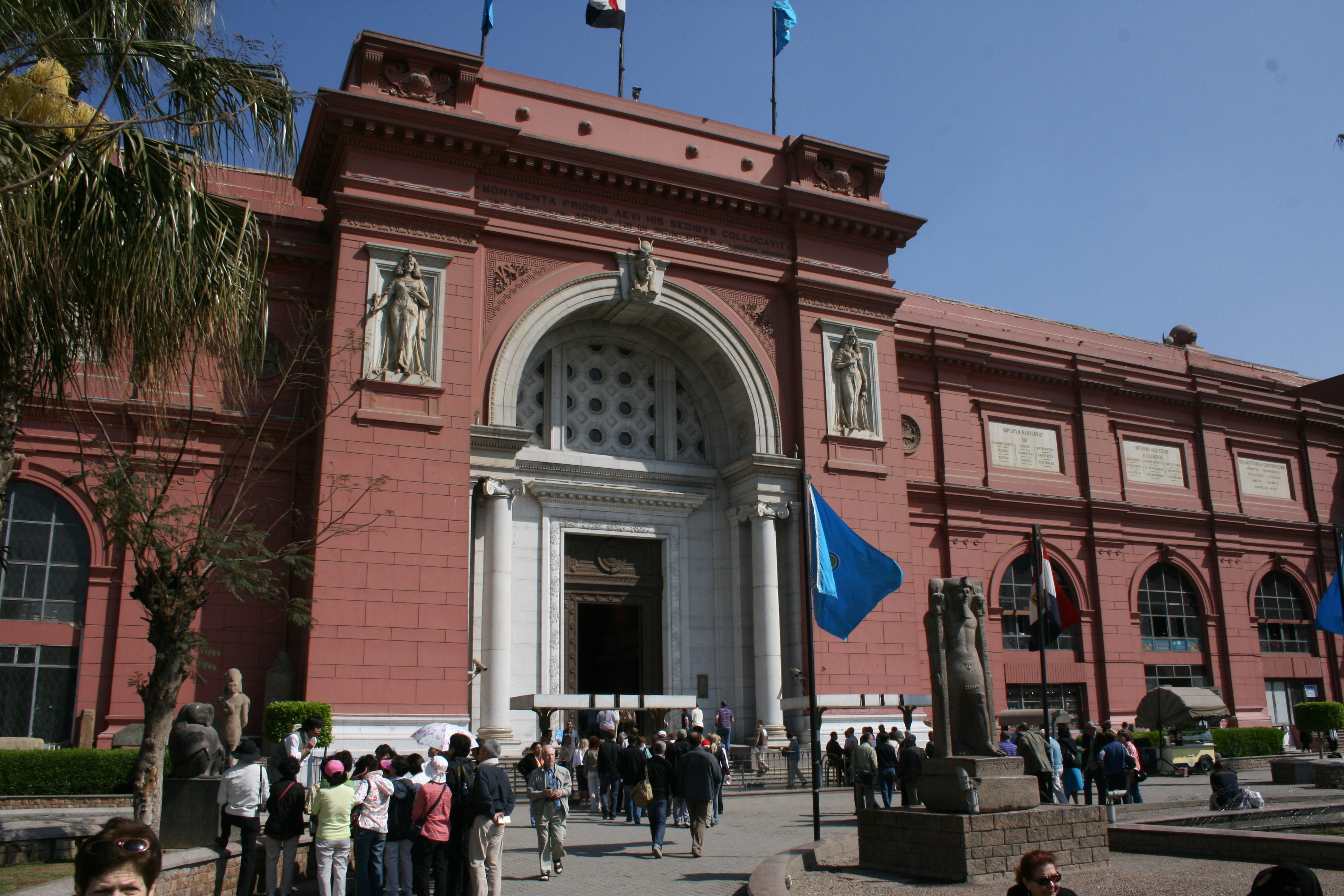
CairoMuseum5

The Cairo Museum – a calm scene in a busy city

And if Cairo is not that appealing for leisure travellers, it’s hardly going to win over business travellers either. In comparison to the modern infrastructure offered by Gulf states like of Dubai or Doha. The minute you step out of the luxury, air-conditioned hotels it is chaos.

The Egyptian government realises Cairo is not that an appealing place to visit, hence its decision to announce plans for a brand new $54 billion capital city in the desert. At 270 square miles it would be about the same size as Singapore. And its airport (which you would hope would have easy access from the city centre) would be even bigger than Heathrow.

Housing government buildings, diplomatic missions and global organisations, Capital Cairo (as the project is being referred to) is very much aimed at the elite. While it may succeed in the attracting international investment and the brightest business minds, it looks set to do nothing for a poor population struggling with sub-standard services.

Having two big cities is a real worry for Egypt’s development. Yes, Capital Cairo will provide jobs for the Egyptian people, but I think it is likely that many of the poor will be left to fend for themselves in the chronically underinvested city of Cairo. They need to see their futures mapped out on the capital’s master plan just as much as the elite.

Unexpected development in self-service checkouts

How many times have you thought you were being clever by skipping a long queue at your local supermarket by heading for the self-service checkouts? But then, after scanning just one item in your basket, the machine gives up all hope of being helpful.”Unexpected item in the bagging area,” says the robotic (yet soothing) voice.

The trouble is that there is nothing – bar hot air – in the bagging area, so you are stuck. The queue for being served by the human operators is shortening, yet you can’t do anything. You are stuck.

But Mrs Robot doesn’t give up. “Unexpected item in the bagging area,” she maintains.

After a few more seconds wait, she finally does accept there may be a problem. “An assistant is on its way,” she announces, but without any form of apology for the inconvenience you are currently facing.

The trouble is that Mrs Robot has promised you an assistant without checking who may be available. You soon realise that you are not the only person with error lights flashing at your terminal.

And you also then discover that the only person that is “trained” to help with the self-service checkout is at the far end of the store finding out whether the bacon Mrs Miggins wants to buy really is buy one, get one free.

Mrs Robot still promises that the “assistant is on its way” but you can’t see any progress. Meanwhile, the person who was at the back of the queue for the human operators when you started having problems is now happily walking out the store with their shopping.

It’s time for you too to join that queue and give up on your self-service adventure. What a waste of time.

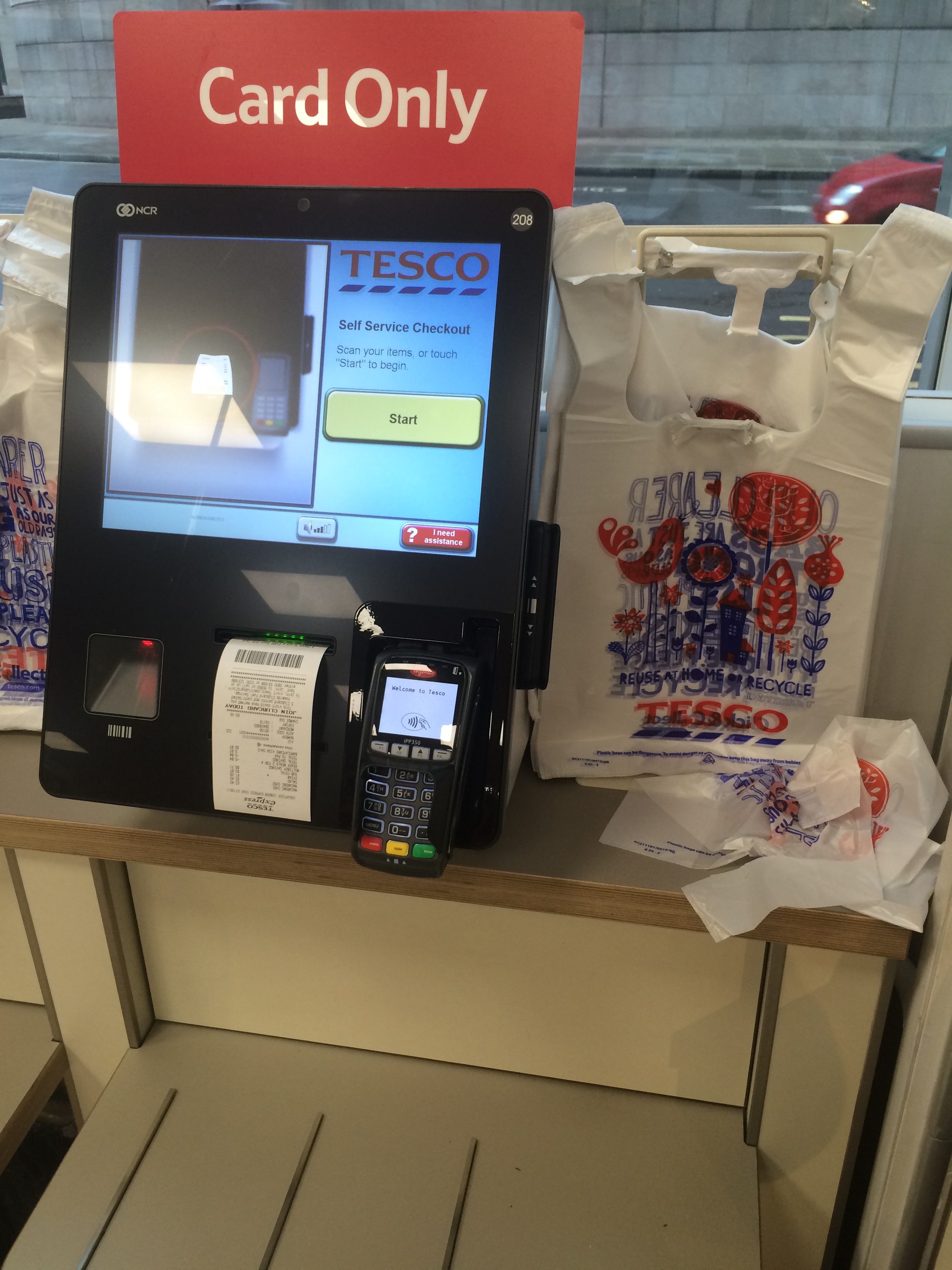
Having had a particularly bad week of “unexpected items in the bagging area” I was thrilled to see some innovation in this technology during a visit to the Tesco Express store near St Paul’s today.

The self-service machine I was presented with was slick, modern and didn’t seem to have any silly mechanism that attempts to work out what your shopping should weigh (thus causing all the calibration problems that brings so much irritation to the good people of Britain).

2015-03-15 15.51.36

The next generation of self-service checkouts

This is a welcome step-forward in the evolution of food shopping and I hope others follow suit and improve their self-service checkouts. My local Morrisons store needs to take particular note, as often only two out of their eight self-service machines are working. And even for the ones that are technically working, there is often that “unexpected” problem.

I once complained to Morrisons about the problem and was provided with the following nonsense response:

“Please be assured various provisions are made in our stores to make shopping easier and we cater for ‘express’ shopping by providing self serve machines. We believe that the system that we operate is as efficient as it can be without being over-strict in its regulation and we rely on our customers’ goodwill and co-operation in using this service.”

Tesco’s investment – by contrast – is very much an unexpected (but much welcomed) development in self-service checkouts.